Sri Lankan scholar Kargen Rajaratnam reflects on study tour in Ikara-Flinders Ranges National Park
Posted: 9 July 2026
On 22–25 May 2026, Australia Awards scholars from South Asia and Mongolia travelled to Ikara-Flinders Ranges for an immersive experience on Adnyamathanha Country. The scholars learnt about the Adnyamathanha people, their culture and their connection to Country under the guidance of John Solar, a Yura man and Adnyamathanha cultural educator.
This NAIDOC Week, we share Sri Lankan scholar Kargen Rajaratnam’s reflections on this trip in his own words.
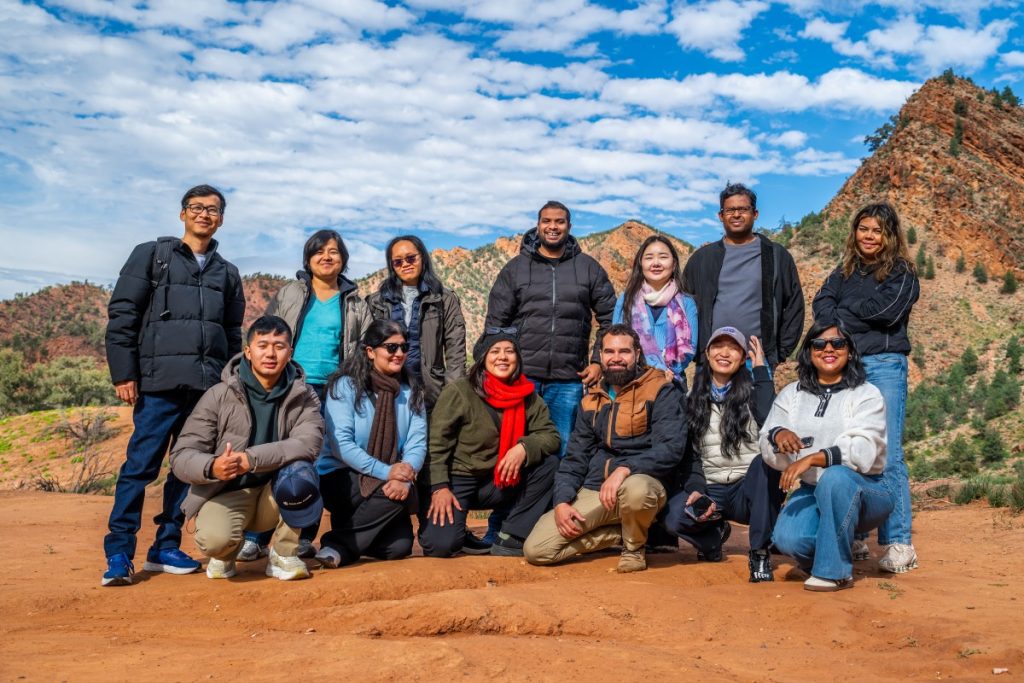
Kargen (second from right, back row) pictured with other scholars and guide John (front row, third from right) and his niece Bridgette (back row, right hand side) at the Ikara-Flinders Ranges National Park.
My visit to Adnyamathanha Country was a deeply reflective experience that changed the way I think about land, decision-making and the long-term impact of human actions on the environment. One of the most significant lessons I took from this journey was understanding how land-use decisions made decades ago can continue to shape the future of communities and ecosystems.
During our visit to the Ikara-Flinders Ranges National Park, John Solar shared the story of the land, including the impacts of sheep farming and how intensive land-use practices contributed to environmental degradation. What struck me most was learning that even after around 40 years of conservation efforts, the land is still recovering. This demonstrated that while restoration is possible, repairing environmental damage requires long-term commitment, patience and collective responsibility.
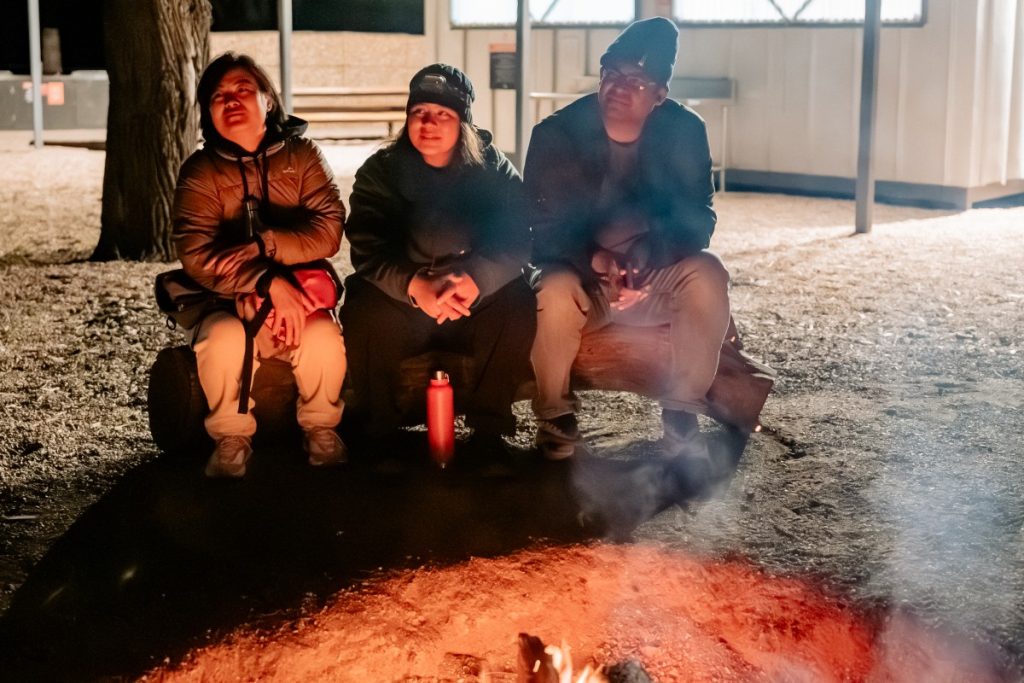
Kargen (right) sitting with Nepali scholars around a campfire.
This experience made me reflect on the importance of thoughtful land-use planning and the responsibility of decision-makers. Development decisions often focus on immediate economic benefits, but the long-term environmental and social consequences can be much harder to reverse. It reminded me that sustainable planning requires looking beyond short-term outcomes and considering the impact on future generations.
The way Adnyamathanha knowledge was integrated with contemporary conservation practices also provided an important lesson. The success of initiatives such as the recovery of the yellow-footed rock-wallaby showed the value of combining traditional ecological knowledge with modern scientific approaches. It highlighted that local communities hold valuable knowledge about managing and protecting their environment.
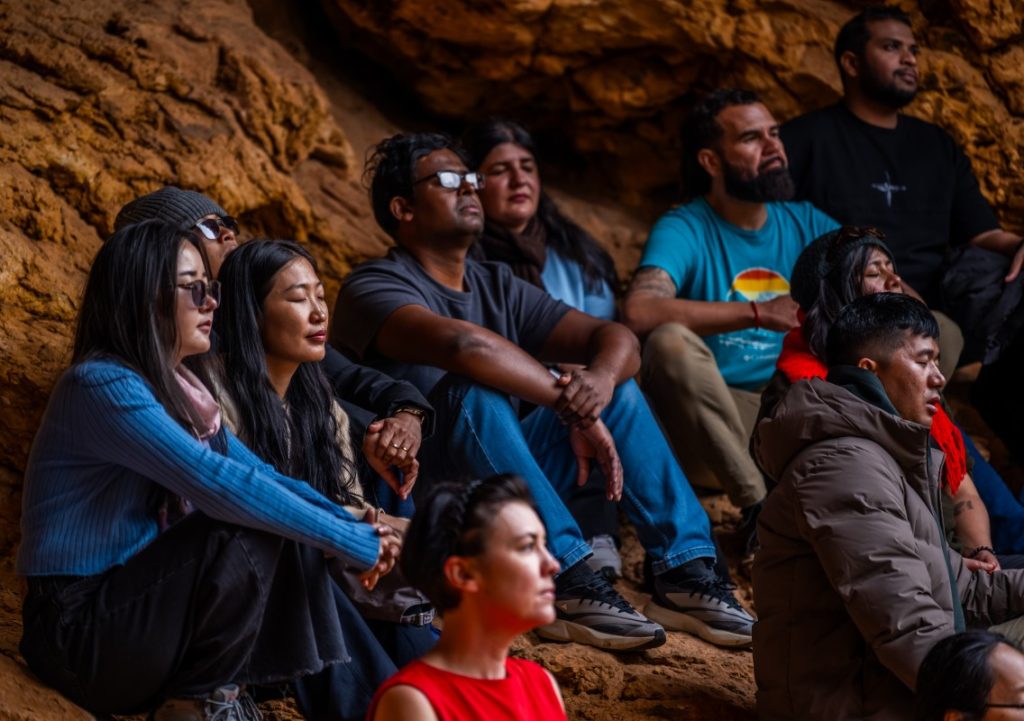
Kargen (fourth from right, back row) engaging in a reflective exercise led by guide John with other scholars and Alice Tamang (front, in red), Australia Awards – South Asia & Mongolia Indigenous Engagement Adviser.
As someone involved in public sector work, this experience encouraged me to think more critically about how policies and decisions affect communities and natural resources. Leadership is not only about achieving immediate outcomes; it is about making responsible decisions that create sustainable benefits over time.
My time on Adnyamathanha Country reminded me that the land carries the consequences of every decision made upon it. It reinforced the need for planning approaches that respect the environment, learn from the past and protect opportunities for future generations.