Mongolian scholar Suvd-Erdene Narmandakh reflects on study tour in Ikara-Flinders Ranges National Park
Posted: 9 July 2026
On 22–25 May 2026, Australia Awards scholars from South Asia and Mongolia travelled to Ikara-Flinders Ranges for an immersive experience on Adnyamathanha Country. The scholars learnt about the Adnyamathanha people, their culture and their connection to Country under the guidance of John Solar, a Yura man and Adnyamathanha cultural educator.
This NAIDOC Week, we share Mongolian scholar Suvd-Erdene Narmandakh’s reflections on this trip in her own words.
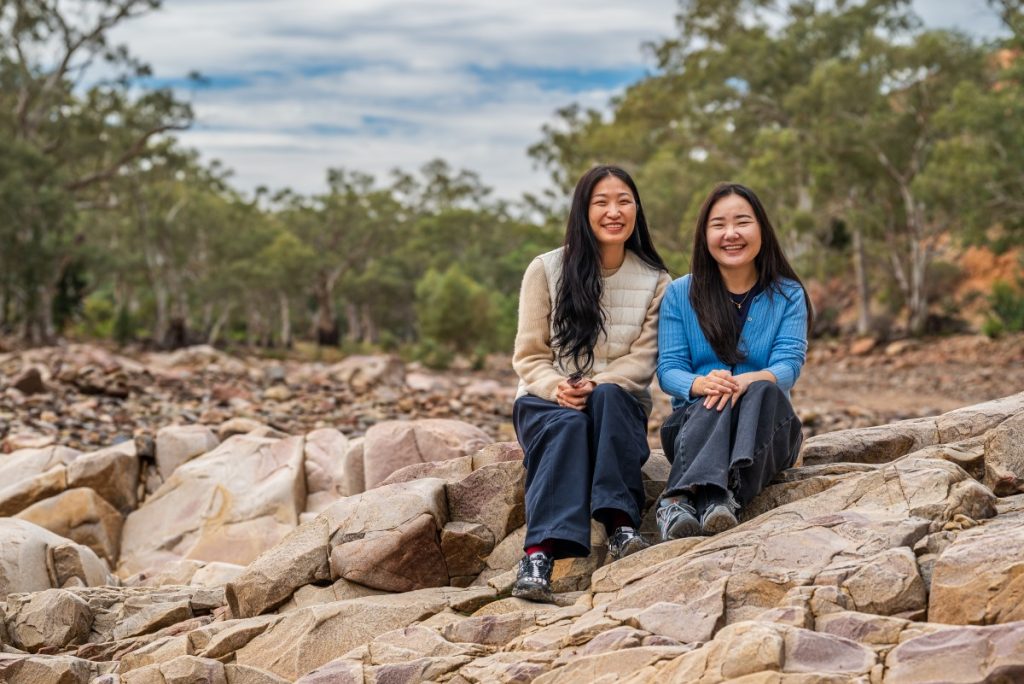
Suvd-Erdene (right) pictured with fellow Mongolian scholar Oyuntugs Tegsheebaatar at the Ikara-Flinders Ranges National Park.
During the First Nations Cultural Immersion Study Tour to Ikara-Flinders Ranges National Park, I learnt directly from our Adnyamathanha guide, John Solar. He welcomed us to Country with a ceremony featuring language, smoke and stories about the Adnyamathanha flag. Throughout the tour, John shared Yura Muda (creation stories); explained cultural uses for plants for food, medicine and ceremonies; and guided us thorough significant sites such as Akurra Adnya (Arkaroo Rock). We also learnt about co-management of the national park by Adnyamathanha traditional owners and the South Australian Government, and how traditional knowledge supports conservation, including the recovery of the yellow-footed rock-wallaby. The experience included learning traditional fire-making, observing wildlife and understanding how Indigenous peoples used the stars for navigation.
This experience was particularly meaningful as it reminded me of my cultural background. As a member of the Zackhchin ethnic group in western Mongolia, I was raised in a nomadic family, where stories, traditions and values were transmitted orally across generations. Listening to John share creation stories reminded me of memories of my grandmother, who frequently recounted stories about our family, homeland and traditions. I recognised that, despite the geographical distance between our cultures, both communities preserve knowledge through storytelling, respect for elders and connection to land.
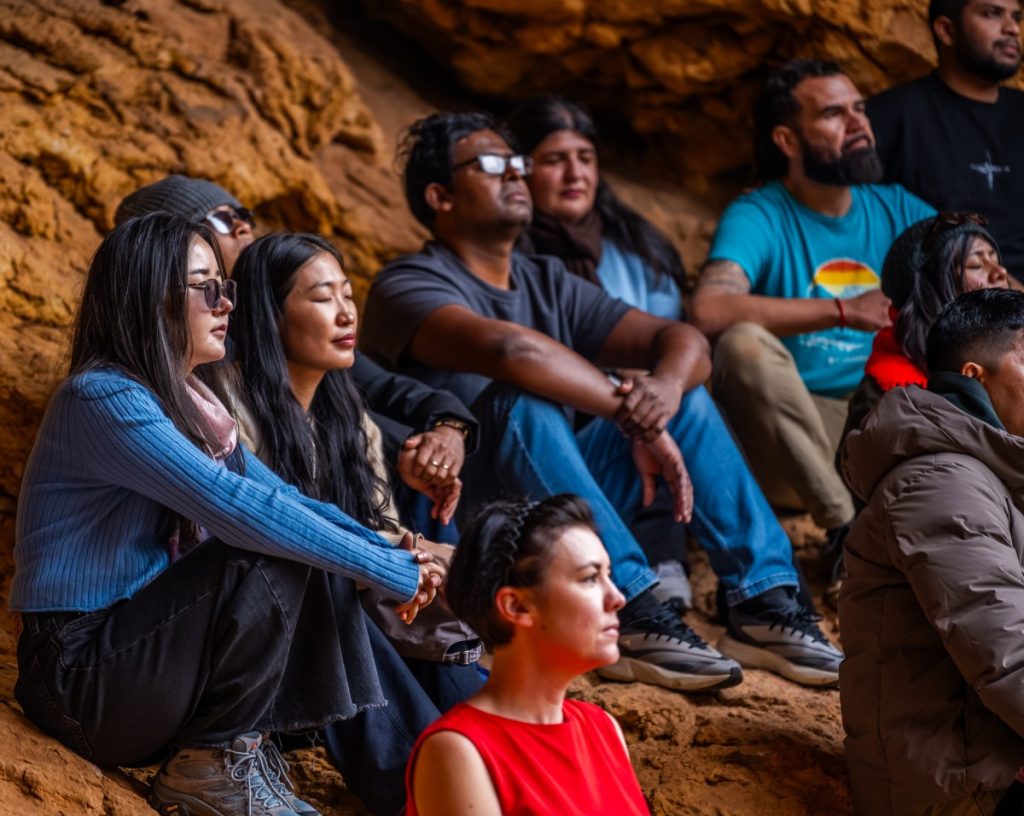
Suvd-Erdene (left) engaging in a mindfulness exercise with other scholars, John (in light blue t-shirt) and Alice Tamang (in red), Indigenous Engagement Adviser, Australia Awards – South Asia & Mongolia during the visit.
As a public health student, I also developed my perspective on wellbeing. Previously, I primarily associated health with healthcare services and disease prevention. However, this tour demonstrated that culture, identity, belonging and connection to place are also critical determinants of health. A strong cultural identity can enhance resilience and community cohesion, and support mental wellbeing.
A key benefit of this experience was seeing how Australian society recognises and respects cultural heritage. The co-management of Ikara-Flinders Ranges showed that traditional knowledge and contemporary science can collaborate to protect biodiversity and cultural heritage. The recovery of the yellow-footed rock-wallaby highlighted the practical value of integrating Indigenous knowledge into environmental management.
This experience also prompted me to reflect on Mongolia’s situation. Although Mongolia has a rich cultural heritage, minority ethnic groups face challenges in preserving traditions as younger generations migrate to urban areas. There is much to learn from First Nations communities in Australia about cultural education, intergenerational knowledge-sharing and maintaining cultural identity in a modern world.
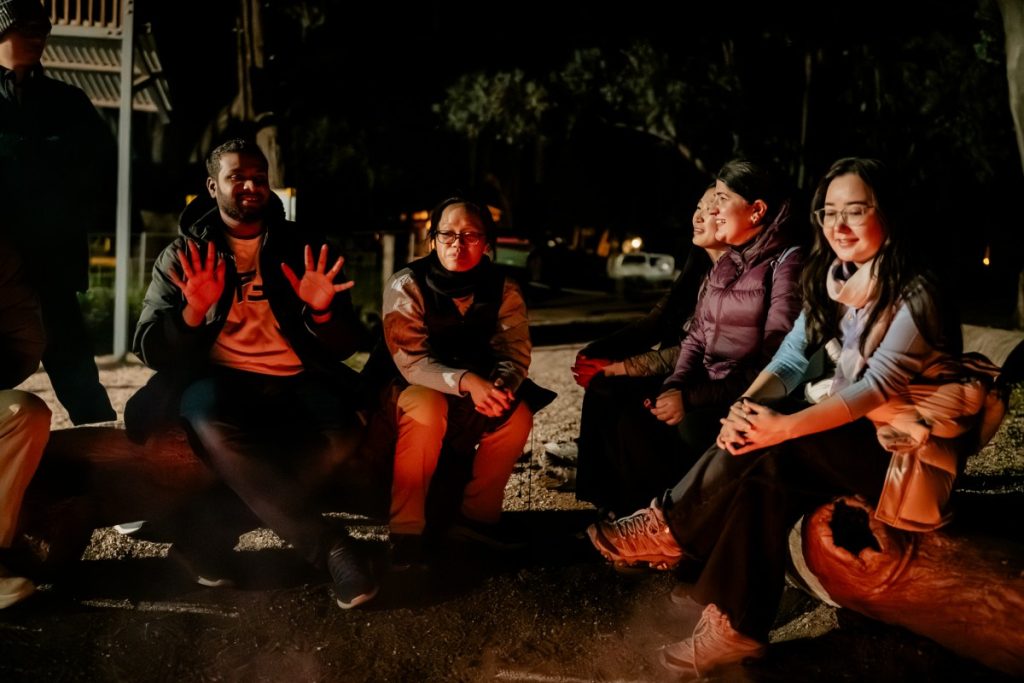
Suvd-Erdene (right) having a light-hearted moment with other scholars after engaging in the fire-making exercise.
This experience changed my perspective on culture and health. I now recognise that preserving cultural identity is both a cultural issue and a public health issue, as it supports emotional wellbeing.
In the future, I intend to apply these lessons in both personal and professional contexts. Personally, I aim to dedicate more time to documenting and learning from the stories and experiences of my Elders to contribute to preservation of my cultural heritage. Professionally, as an aspiring public health practitioner, I will prioritise the significance of cultural identity, community connection and traditional knowledge when addressing health and wellbeing. This experience has motivated me to examine how strategies implemented by First Nations communities in Australia could inform initiatives to enhance cultural continuity and community wellbeing in Mongolia.