

Bangladeshi scholar Nahid Nawrin Sultana reflects on study tour in Ikara-Flinders Ranges National Park
Posted: 9 July 2026
On 22–25 May 2026, Australia Awards scholars from South Asia and Mongolia travelled to Ikara-Flinders Ranges for an immersive experience on Adnyamathanha Country. The scholars learnt about the Adnyamathanha people, their culture and their connection to Country under the guidance of John Solar, a Yura man and Adnyamathanha cultural educator.
This NAIDOC Week, we share Bangladeshi scholar Nahid Nawrin Sultana’s reflections on this trip in her own words.
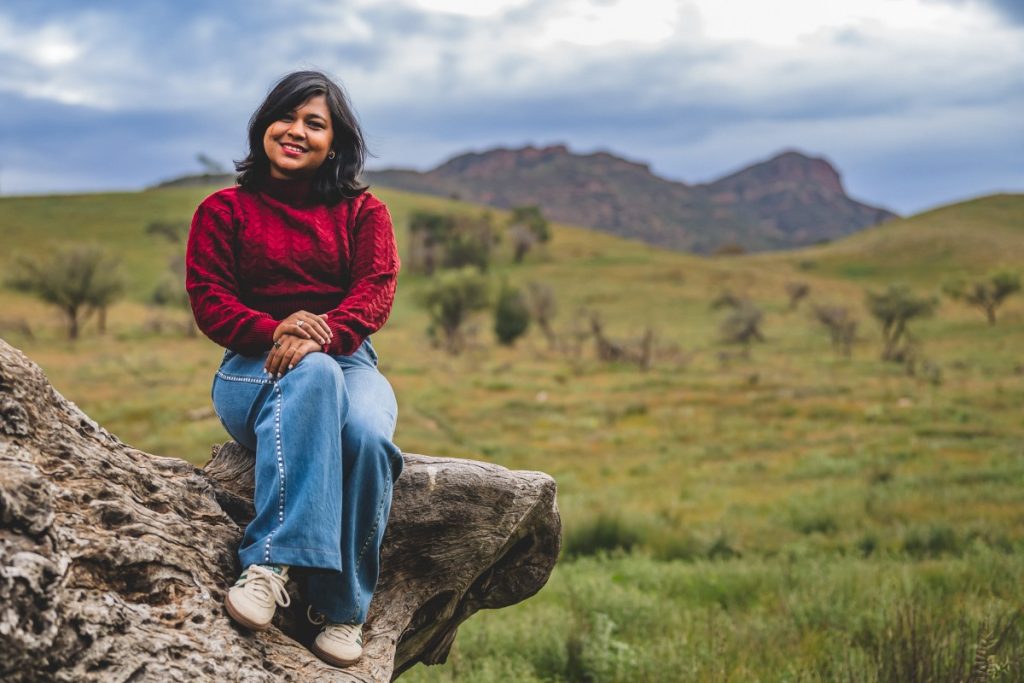
Nahid pictured at the Ikara-Flinders Ranges National Park.
I recently participated in the First Nations Engagement Experience at Ikara-Flinders Ranges on Adnyamathanha Country through Australia Awards, and it became one of the most meaningful experiences during my time in Australia. I arrived expecting to see a landscape; I left with a deeper understanding of Country, culture and connection.
As an Environmental Science student and a veterinarian in my home country, I have always thought about sustainability mainly in terms of science, conservation and environmental management. However, this experience taught me that caring for the environment is also deeply connected with culture, stories, relationships and respect for Country.
One of the most memorable parts of the journey was listening to John share cultural stories while we stood within the landscape itself. Hearing about ancestors, Yura Muda (creation stories), traditional fire practices, medicinal plants and navigation using the stars made the experience feel very real and personal. It was different from classroom learning because the stories were connected directly to the land around us.
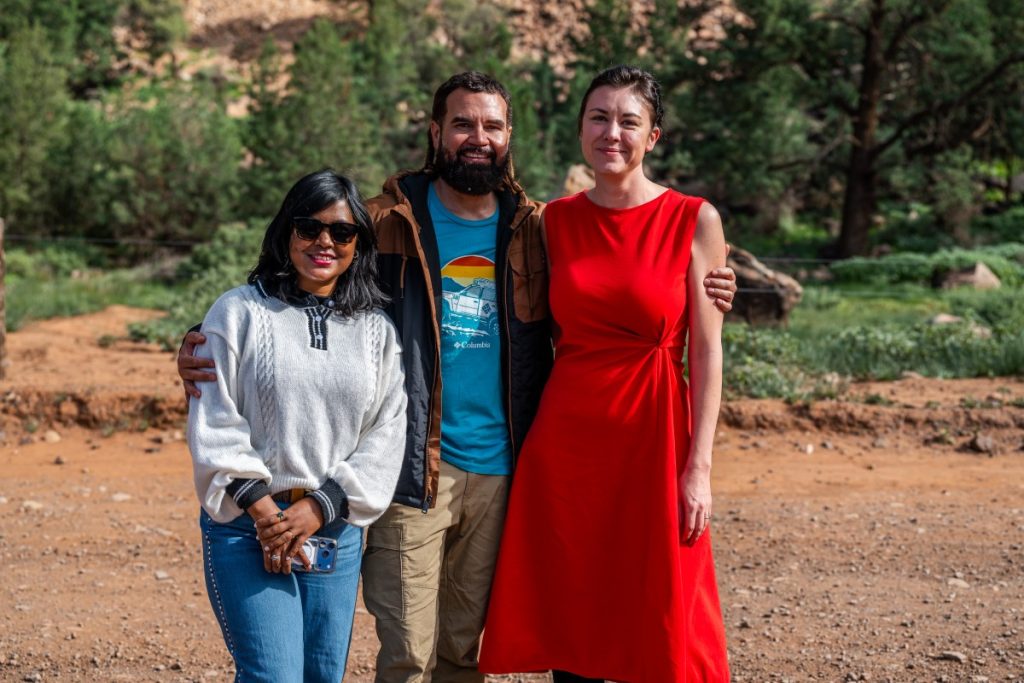
Nahid (right) with John (middle) and Alice Tamang (right), Australia Awards – South Asia & Mongolia’s Indigenous Engagement Adviser.
I was especially interested in learning about traditional medicinal plants because of my veterinary background and interest in environmental health. It made me reflect on how Indigenous knowledge has supported communities for thousands of years through close observation of nature and deep understanding of the environment. As someone with a background in animal health, I was fascinated by how traditional knowledge and careful observation of nature have supported both people and ecosystems for generations.
Another part that stayed with me was learning how traditional Adnyamathanha knowledge is integrated into the management of Ikara-Flinders Ranges National Park alongside modern scientific conservation practices. Seeing how Indigenous ecological knowledge contributes to protecting biodiversity, including the recovery of the yellow-footed rock-wallaby, showed me the importance of combining different knowledge systems to build more sustainable futures.
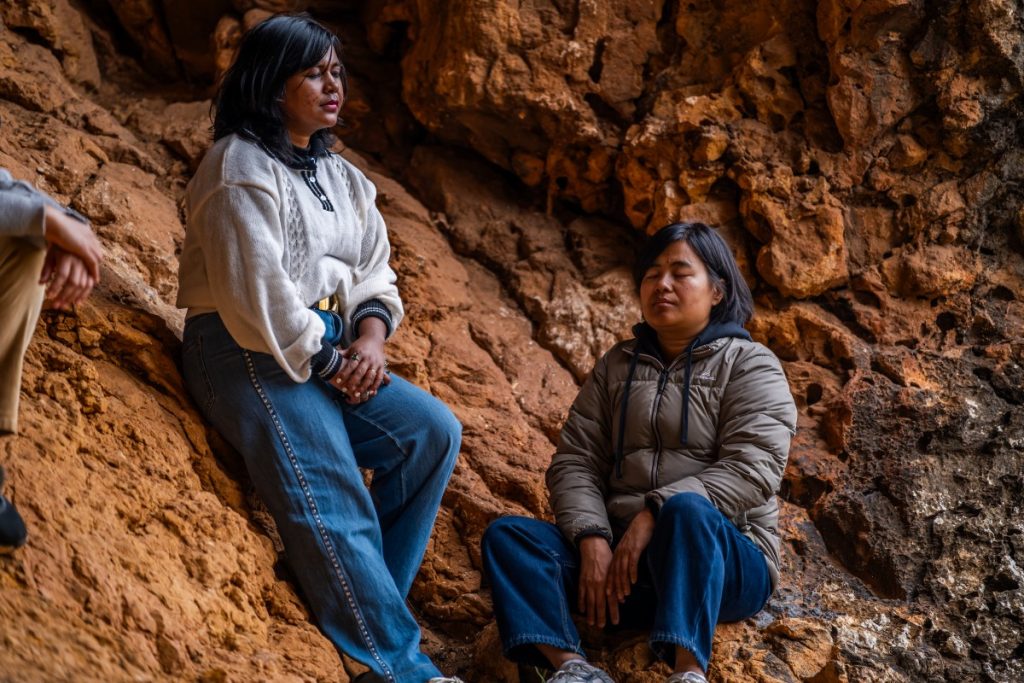
Nahid (left) engaging in a reflective session with other scholars during the visit.
Visiting Akurra Adnya and seeing ancient rock art connected to the stories we heard throughout the journey was also deeply meaningful. It reminded me that landscapes are not only physical places, but also hold memory, identity, culture and history across generations.
Beyond academic learning, this experience encouraged personal reflection. Sometimes we become so focused on research, deadlines and finding solutions that we forget the importance of listening and observing carefully. This journey reminded me that learning can also happen quietly through stories, connection and spending time on Country.
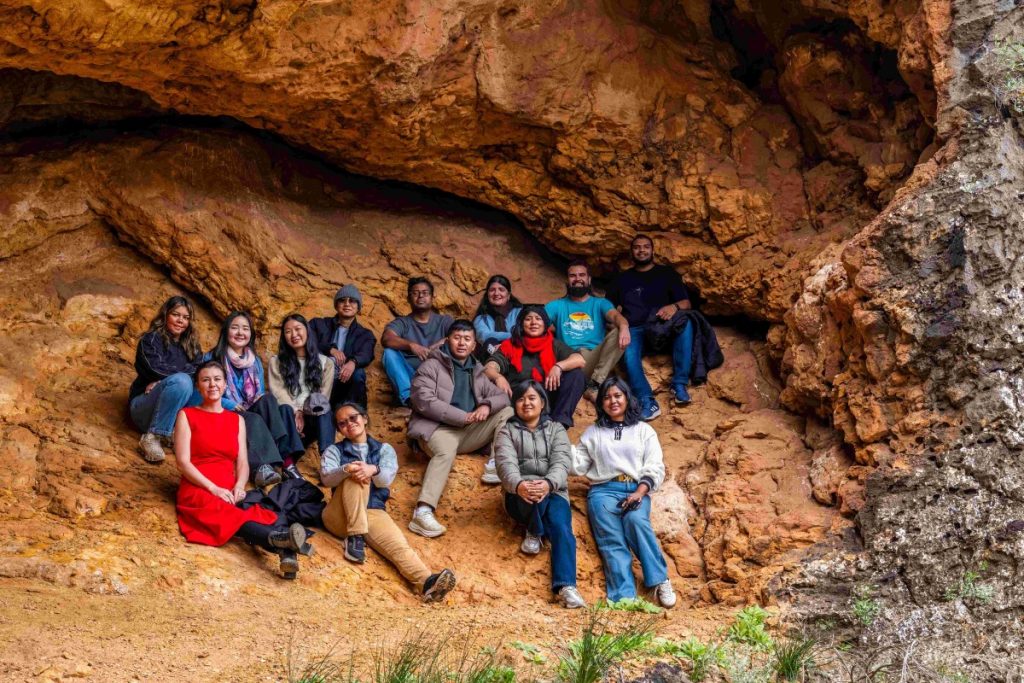
Nahid (right, front row) pictured with all scholars, Alice (in red dress) and John (second from right, back row) at the at the Ikara-Flinders Ranges National Park.
This experience reminded me that environmental stewardship is not only built through research and policy, but also through relationships, respect and learning from communities who have cared for Country across generations.
I am grateful to Australia Awards for creating opportunities that extend learning beyond classrooms and help scholars grow both personally and professionally. This experience will continue to influence how I think about sustainability, environmental management, and the relationship between people and nature in the future.