

Nepali scholar Rubina Bishunke reflects on study tour in Ikara-Flinders Ranges National Park
Posted: 9 July 2026
On 22–25 May 2026, Australia Awards scholars from South Asia and Mongolia travelled to Ikara-Flinders Ranges for an immersive experience on Adnyamathanha Country. The scholars learnt about the Adnyamathanha people, their culture and their connection to Country under the guidance of John Solar, a Yura man and Adnyamathanha cultural educator.
This NAIDOC Week, we share Nepali scholar Rubina Bishunke’s reflections on this trip in her own words.
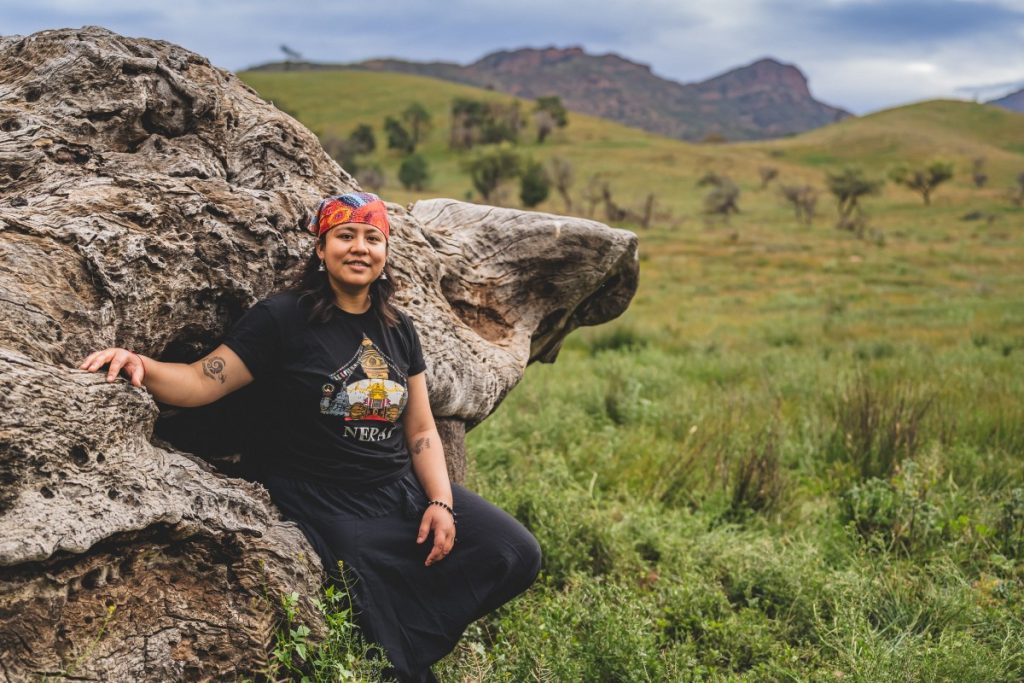
Scholar Rubina Bishunke.
As I reflect on the Ikara-Flinders Ranges Cultural Immersion Study Tour in the breathtaking Adnyamathanha Country, I also recount the memories shared between John Solar (a Yura man and true knowledge guide) and the diverse Australia Awards scholars from South Asia and Mongolia. We were all connected in the Country through this immersive excursion, bringing our own ‘spiritual backpack’ (in John’s words) and pillars we hold—our culture, language and identities. This took us outside of any classroom lectures because we were living and learning from the country’s connection: pausing, reflecting and looking inward.
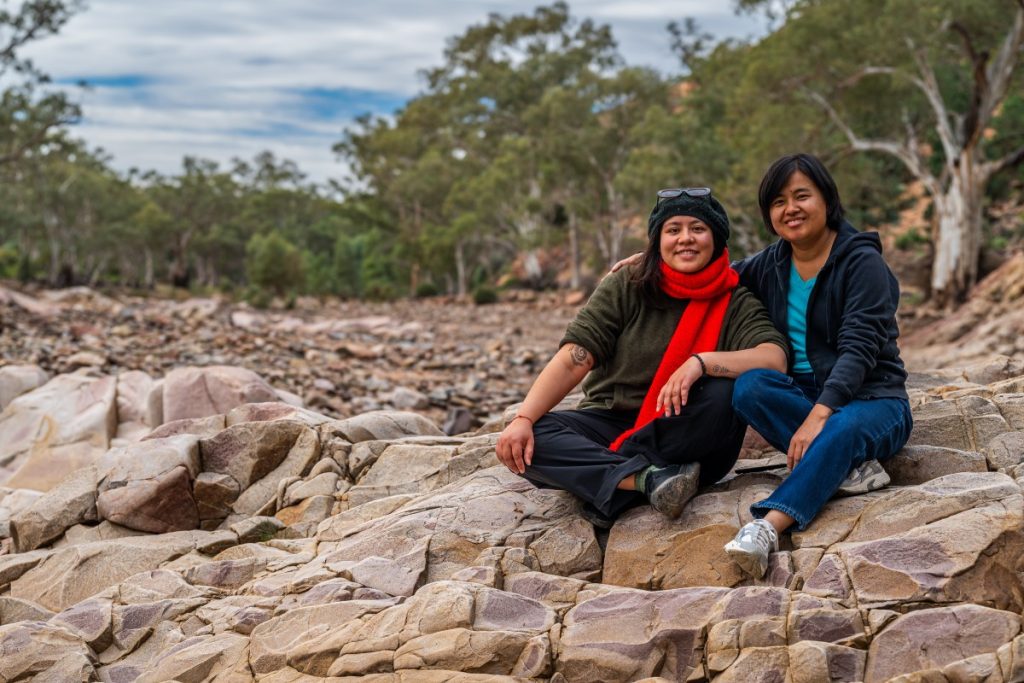
Nepali scholars Rubina Bishunke (left) and Rita Baramu (right) pictured at the Ikara-Flinders Ranges National Park.
Adnyamathanha Country will truly hold a special place in my heart. From the moment John welcomed us through the smoking ceremony, I heard the whisper of the Country that guided us to a safe and inclusive space to share our curiosity. Following John with our careful footsteps, we were also paving the way to see ourselves. I felt the Country was healing us as we were being invited and encouraged to deepen our understanding through flora (Minga bush and curry bush); ancient rock formations and fossils (stromatolites); the creation stories of Yura Muda; Akurra Adnya; the wild fauna (andu, yurlu, idnya, witjuri, urdlu); and ochre, symbols and their cultural significance.
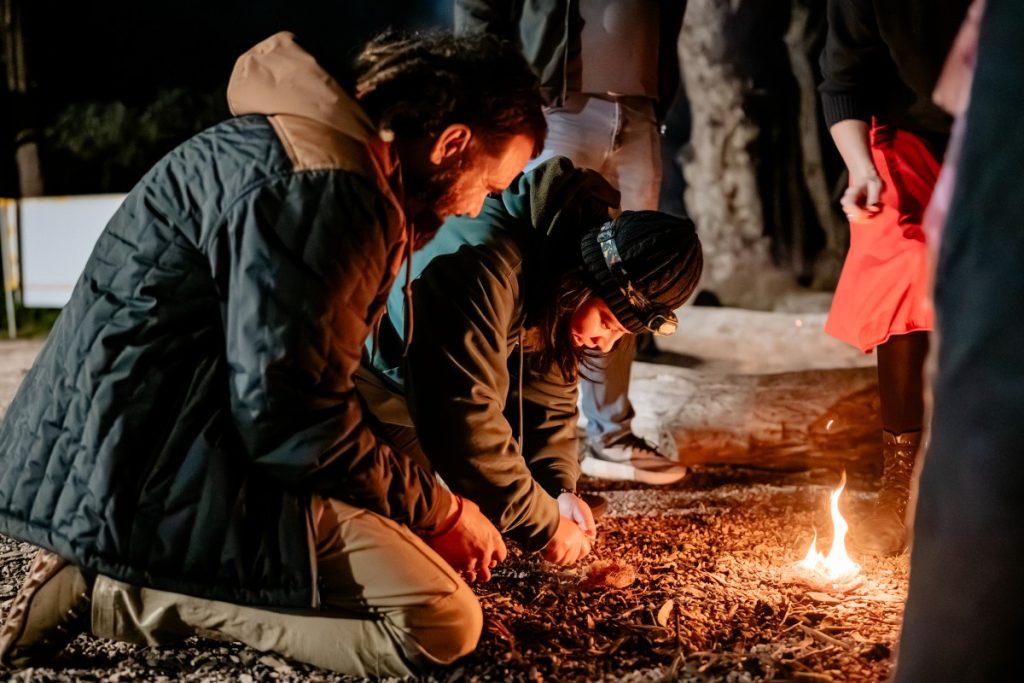
Scholar Rubina Bishunke (centre) making a fire under John’s guidance.
The walk in Adnyamathanha Country also made me reflect on how living in a chaotic rush has made us forget to be grounded in our cultural strength. The mindfulness stories of sacred caves that John shared deepened my connection to myself through self-care practices and made me realise that by reconnecting with who we are and our inner selves, we also ground ourselves in self-determination, forgiveness and resilience.
When John shared with us the process of making fire with flint, I saw a community in action. We listened and observed first, then acted. It was a skill that empowered our will and agency, even though it might have looked like a simple task. The process itself created a safe space to feel valued and not judged. And by respecting our individual strengths, we were also building collective confidence. The stories under the fire were a shared journey for all of us, because not only did they bring us closer to ourselves, but they also fostered our relationship with our community, bringing reciprocity, mutual respect and sovereignty.
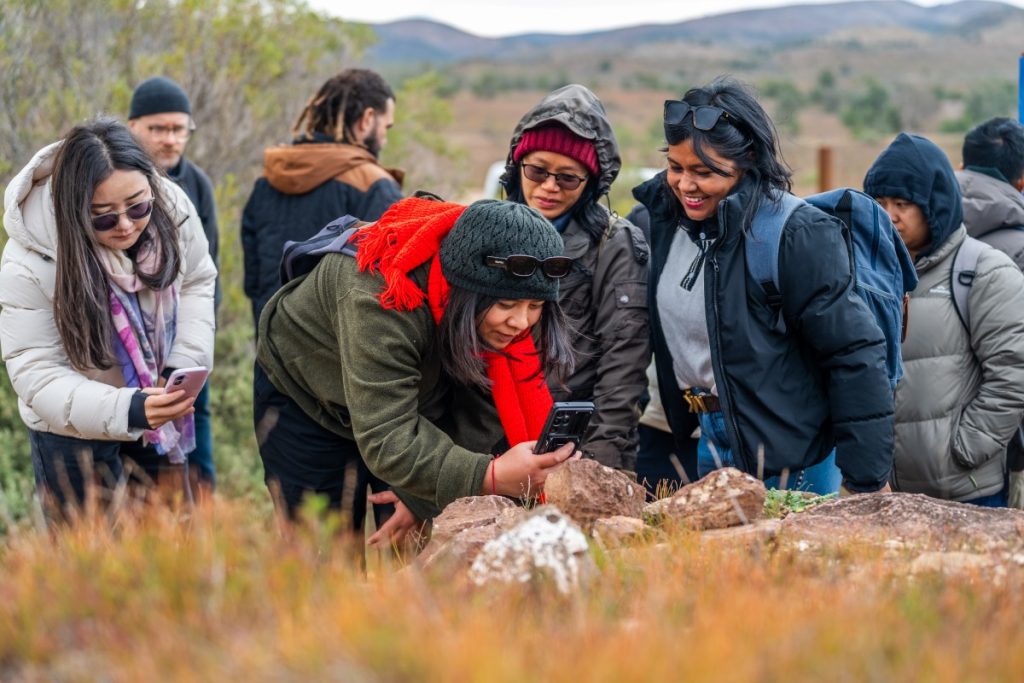
Scholar Rubine Bishunke (with red scarf) taking a picture of … at the Ikara-Flinders Ranges National Park.
“If you’ve got fire in your belly, make sure the fire in your belly doesn’t burn you out,” John Solar told us. Positioning myself as an indigenous Dalit woman from Nepal on a journey to understand the two cultural identities I carry, these words from John have guided me to be self-aware and find balance in my own position when I show up in community spaces. This has also made me question—whose voices am I hearing when we talk about community development? Are we letting the community tell their own stories? Are we working for the community or with the community? This immersive experience is a call for me to understand indigenous governance and self-determination as I commit to work with humility, integrity, openness and honesty, fostering community ownership and a community-led governance system in Nepal.