

Nepali scholar Rita Baramu reflects on study tour in Ikara-Flinders Ranges National Park
Posted: 9 July 2026
On 22–25 May 2026, Australia Awards scholars from South Asia and Mongolia travelled to Ikara-Flinders Ranges for an immersive experience on Adnyamathanha Country. The scholars learnt about the Adnyamathanha people, their culture and their connection to Country under the guidance of John Solar, a Yura man and Adnyamathanha cultural educator.
This NAIDOC Week, we share Nepali scholar Rita Baramu’s reflections on this trip in her own words.
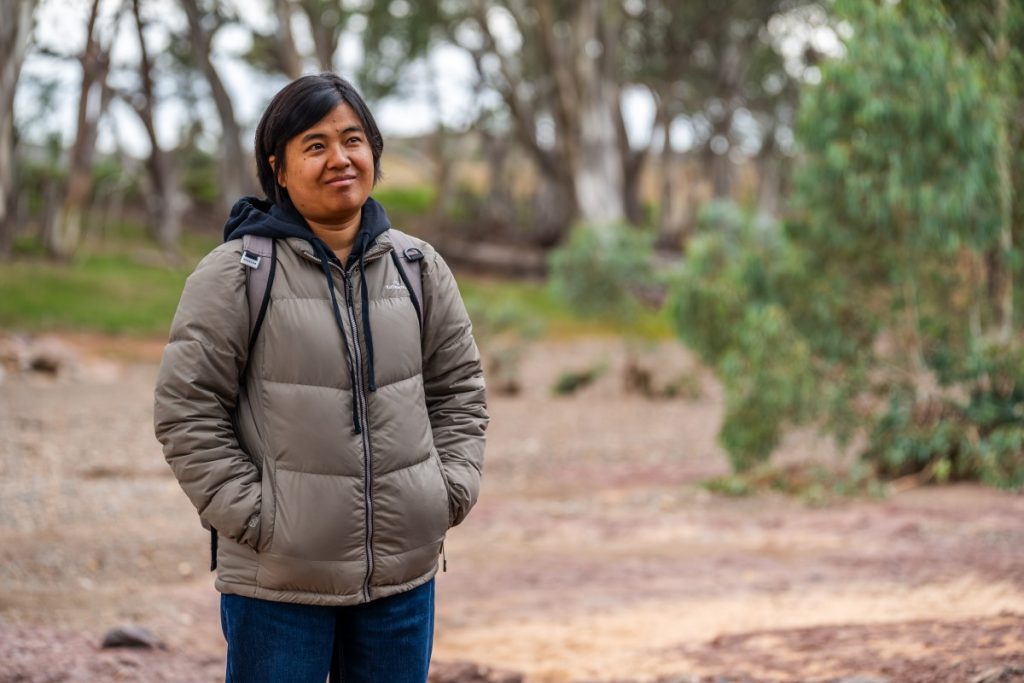
Nepali scholar Rita Baramu.
During the Indigenous Cultural Immersion Study Tour in May this year, I got the wonderful opportunity to visit the beautiful scenery of the Ikara-Flinders Ranges National Park. I also got to experience the culture of the Adnyamathanha people through different activities. We heard the Yura Muda (creation stories) of the Adnyamathanha people from our guide, John Solar. We went hiking to Akurra Adnya (Arkaroo Rock), the sacred Adnyamathanha rock art sites in the park and the Brachina Gorge Geological Trail, where fossils from hundreds of millions of years ago are found, showing different phases of Earth’s evolutionary processes. While hiking, the mountains reminded me of those back at home.
As a Baramu indigenous woman from Nepal, this tour has been a healing experience. Growing up, my indigeneity often felt distant and disconnected from my everyday life. I struggled to relate to or take pride in my own culture and heritage. In many ways, I was made to feel ashamed or uncertain about being Baramu. This was shaped by a broader political and economic system rooted in colonial and imperial legacies, which encouraged me to value global popular culture more than my own cultural traditions.
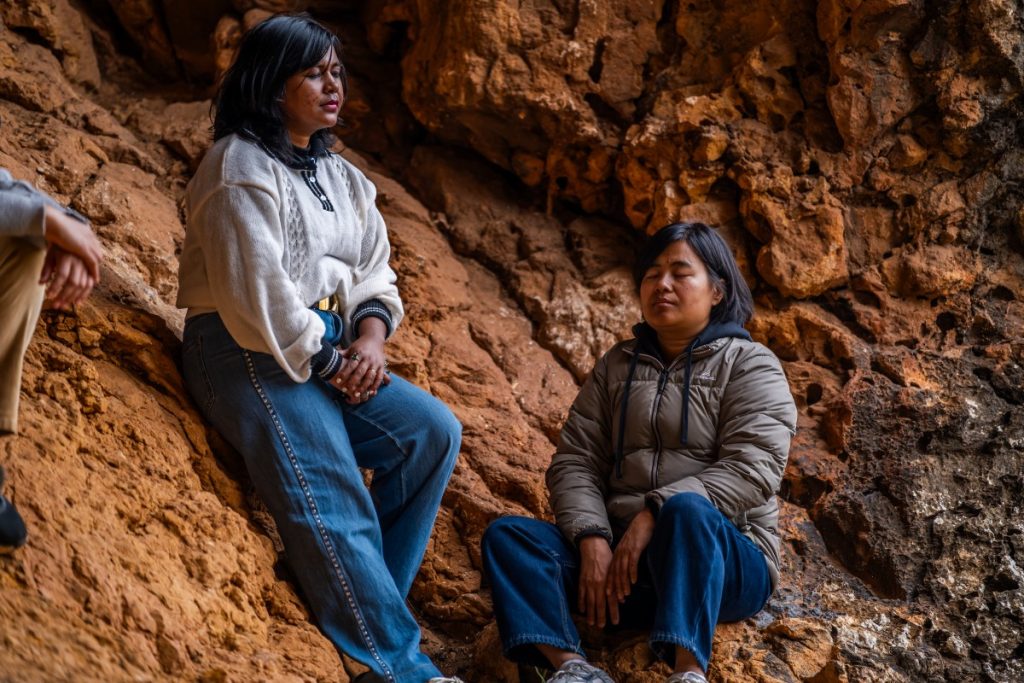
Nepali scholar Rita Baramu (right) engaged in a reflective exercise with other scholars during the visit.
As I lost my mother tongue, so did my mother and grandmother. Along with the language, we lost important ways of knowing, being and relating to the world. This tour created a space for healing through the stories of similar values and resilience shared by the Adnyamathanha people and Aboriginal communities in Australia. Listening to John share their histories, cultural practices and value systems, I found many points of connection with my own experiences and those of my community. For example, John shared how he found his job difficult as a ranger because of his cultural values, and how he did not want to move people away from camping areas or charge them money, because Adnyamathanha people value the land and believe it should be shared rather than profited from. This story touched me in two ways. First, I have always believed that land should not be owned but shared by communities. Second, I have also faced difficulties in my job because of my indigenous value system, which does not align with capitalism and its norms of competition, hierarchy and profit. The suffering I have experienced is not simply personal but stems from a capitalist system that centres individuals rather than communities.
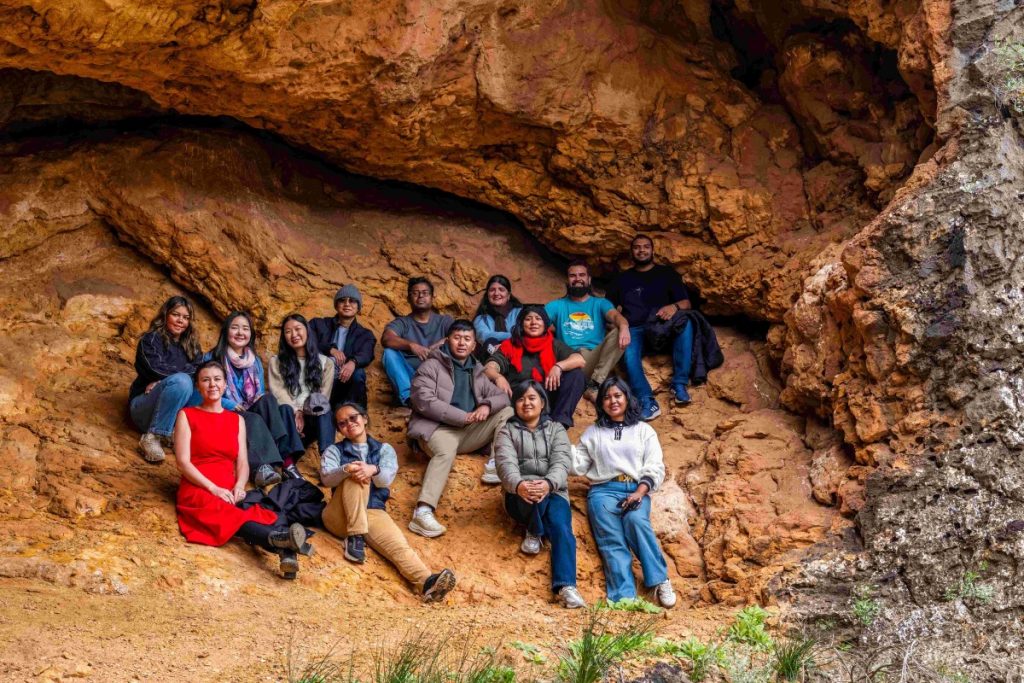
Nepali scholar Rita Baramu (front row, second from right) pictured with other scholars, John (back row, second from right) and Alice Tamang (front, in red dress), Indigenous Engagement Adviser for Australia Awards – South Asia & Mongolia.
Similarly, John’s story of what he carries in his metaphorical backpack made me emotional at the end of this tour. His emphasis on kindness and forgiveness touched my heart, as these are the core of our indigeneity too. Without forgiveness, we won’t be able to live a meaningful life, yet this very quality has made us suffer throughout history. But we still are solid and resilient. This realisation was bittersweet. Ultimately, these experiences and certain realisations made me reconnect with my own indigeneity and cherish my existence as an indigenous woman.
Similarly, I had the invaluable realisation of the similarities we indigenous people share all over the world, such as our love for nature. Our livelihood is connected to the ecosystem but our livelihood is put in danger by colonisers and authorities in the name of civilisation and development. Another similarity I found is our traditional knowledge system and how it’s passed through generations by storytelling, but how it’s slowly disappearing due to the modern education system and political economy.
Even talking to fellow indigenous participant Aki Mittra Chakma from Bangladesh, his stories reminded me that despite the different contexts in which indigenous peoples live, we often share common struggles against dispossession, cultural erasure and marginalisation, as well as a shared commitment to resilience, survival and cultural renewal. I made incredible friends during this tour from indigenous and non-indigenous identities who value and support ways of indigenous being.
I mentioned during our reflection session the other day that, although the tour was designed and led in collaboration with Adnyamathanha people, it did not position them as the subject of entertainment for visitors. We learnt about Adnyamathanha history, culture, traditions and creation stories in a way that was respectful and educational. I was also impressed by the strong emphasis on intellectual and cultural property rights. Visitors were required to seek consent before taking photographs, and video recordings were not permitted when John was sharing stories. We were also asked not to retell certain stories. These practices felt highly respectful and dignified, helping to safeguard Indigenous knowledge from cultural appropriation.
This experience made me reflect on the situation in Nepal, where the cultural appropriation of indigenous communities by both non-indigenous Nepalis and international actors often goes unnoticed. Indigenous cultures have long been showcased in the name of tourism and economic development. While tourism can create livelihood opportunities, it can also reduce cultural practices for people’s consumption and entertainment. At times, cultural expression seems to be primarily serving the interests of the state, tourism industries or outside audiences rather than the communities themselves.
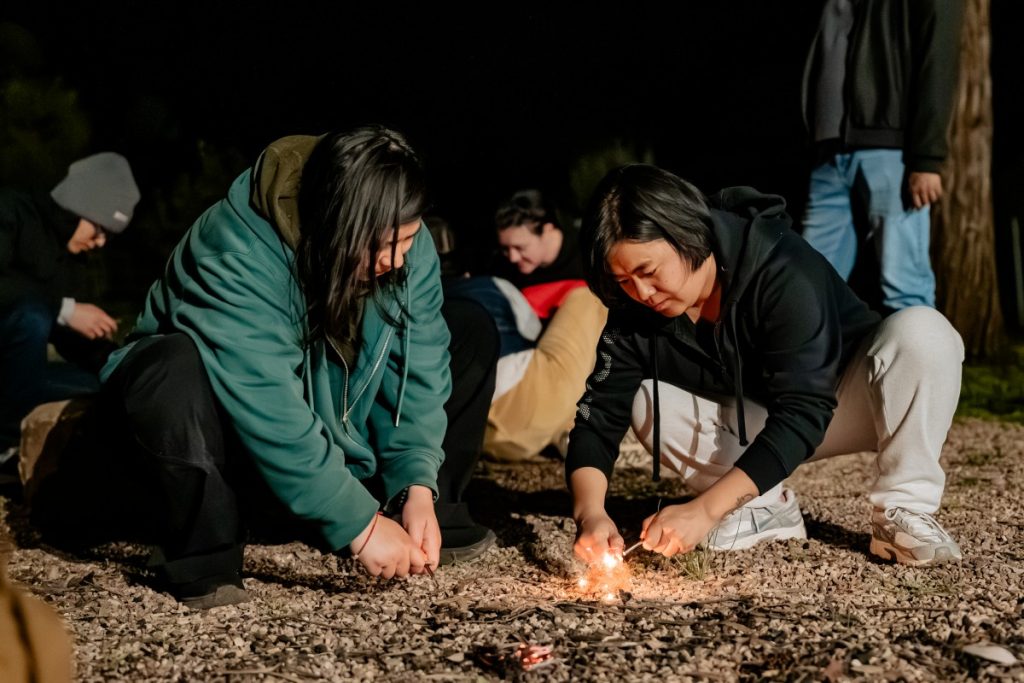
Nepali scholar Rita Baramu (right) engaged in a fire-making exercise with fellow Nepali scholar Rubina Bishunke.
I have also encountered instances where tourists have mocked indigenous cultural performances and traditional practices online, which can be deeply disrespectful and harmful to the communities concerned. Such representations risk reinforcing unequal power relations and diminishing the cultural significance of these traditions. I find this particularly troubling because cultural heritage should be engaged with through respect, understanding and reciprocity, rather than amusement or commodification.
In this context, there is much that Nepali authorities and indigenous communities could learn from approaches such as those practised by the Adnyamathanha people. Strengthening protections for indigenous intellectual and cultural property and developing tourism models that prioritise community consent, ownership and dignity would be important steps forward. Nepal should also prioritise indigenous knowledge in order to protect its natural conservation. The success of the Bounceback Program in Australia [in helping conserve the yellow-footed rock-wallaby population] demonstrates that indigenous knowledge systems are very effective when it comes to protecting biodiversity.