Mongolian scholar Oyuntugs Tegsheebaatar reflects on study tour in Ikara-Flinders Ranges National Park
Posted: 9 July 2026
On 22–25 May 2026, Australia Awards scholars from South Asia and Mongolia travelled to Ikara-Flinders Ranges for an immersive experience on Adnyamathanha Country. The scholars learnt about the Adnyamathanha people, their culture and their connection to Country under the guidance of John Solar, a Yura man and Adnyamathanha cultural educator.
This NAIDOC Week, we share Mongolian scholar Oyuntugs Tegsheebaatar’s reflections on this trip in her own words.
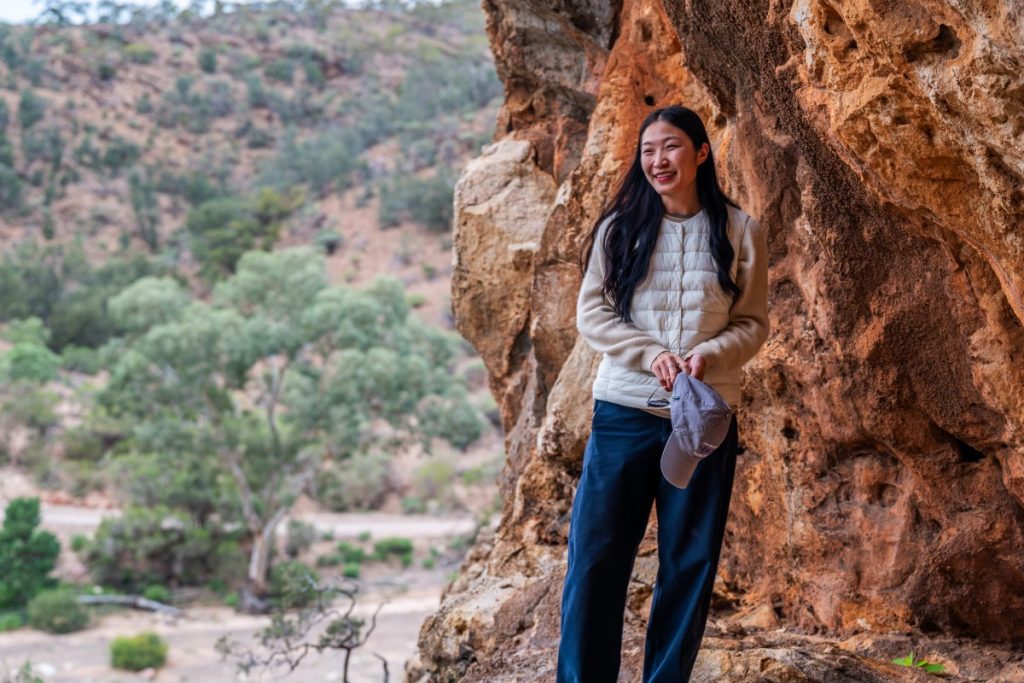
Oyuntugs in a cave in the Ikara-Flinders Ranges National Park.
Before joining the Ikara-Flinders Ranges trip, I expected to learn about Indigenous culture and history. However, the experience gave me a much deeper understanding of the relationship between people, land and environmental knowledge. As a Master of Environmental Management student and someone who has worked in the land management sector in Mongolia, I found the visit both professionally and personally meaningful. It helped me see how traditional knowledge can support environmental management and strengthen connections between people and nature.
One of the most valuable lessons for me was learning how the Adnyamathanha people understand and manage their environment through traditional ecological knowledge. At first, stories such as the Akurra (water snake) story seemed to be cultural narratives. However, I learnt that these stories also include practical environmental knowledge. The path of Akurra represents important water sources across the landscape and helps pass this knowledge from one generation to the next. This showed me that traditional knowledge is not only about culture but also about understanding and managing natural systems.
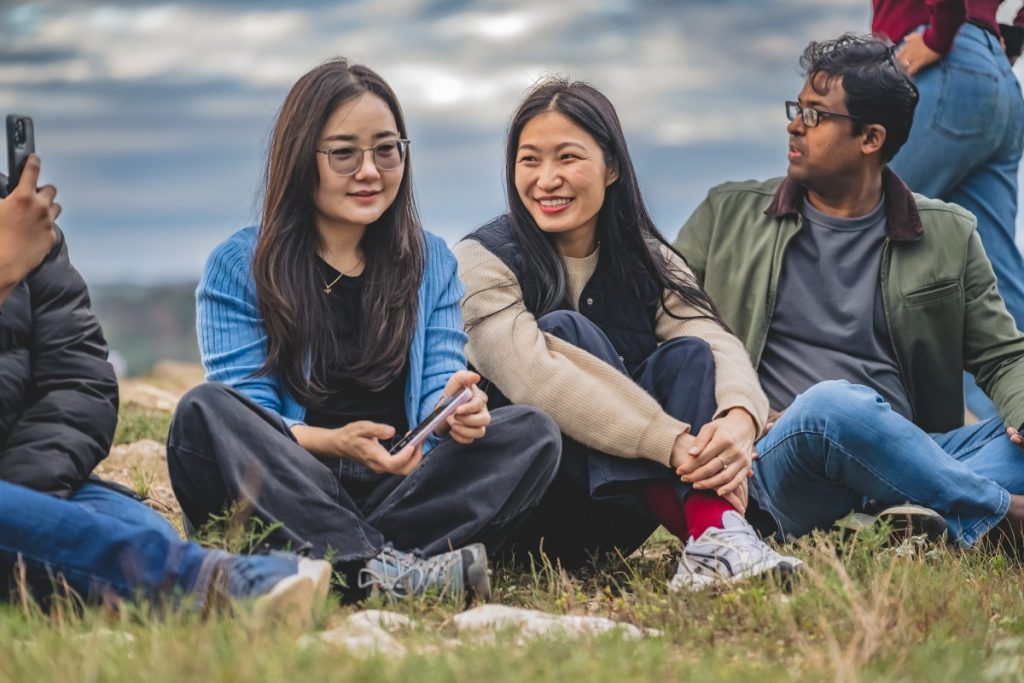
Oyuntugs (second from right) pictured with fellow Mongolian scholar Suvd-Erdene (left) during the visit.
In addition, I was particularly interested in learning about water and seasonal cycles in this semi-arid area. Many creeks in the region only flow after rainfall and remain dry for much of the year. Because of this, knowing where water can be found and understanding the timing of rainfall are essential for survival. I learnt that the Adnyamathanha people developed detailed knowledge of these environmental patterns over many generations. Their understanding of water availability, seasonal changes and landscape conditions reflects a sophisticated environmental knowledge system that is closely connected to the local environment.
Another aspect that impressed me was the knowledge of flood impacts and environmental change. I learnt that people understood which plants would grow after flood events, where they would appear, and how they would become available as food and medical resources. This knowledge allowed communities to respond to changing environmental conditions and make informed decisions about resource use. From an environmental management perspective, I was impressed by how closely people observed ecological processes and used that knowledge to adapt to a variable climate.
The study tour also reminded me of similarities between Indigenous knowledge in Australia and traditional knowledge in Mongolia. Mongolian herders have long relied on observations of weather, vegetation, water availability and animal behaviour to make decisions about grazing and seasonal movement. Although the environments are different, both knowledge systems are based on long-term observation and strong connections to the land. This experience encouraged me to think more deeply about the value of local knowledge in environmental decision-making.
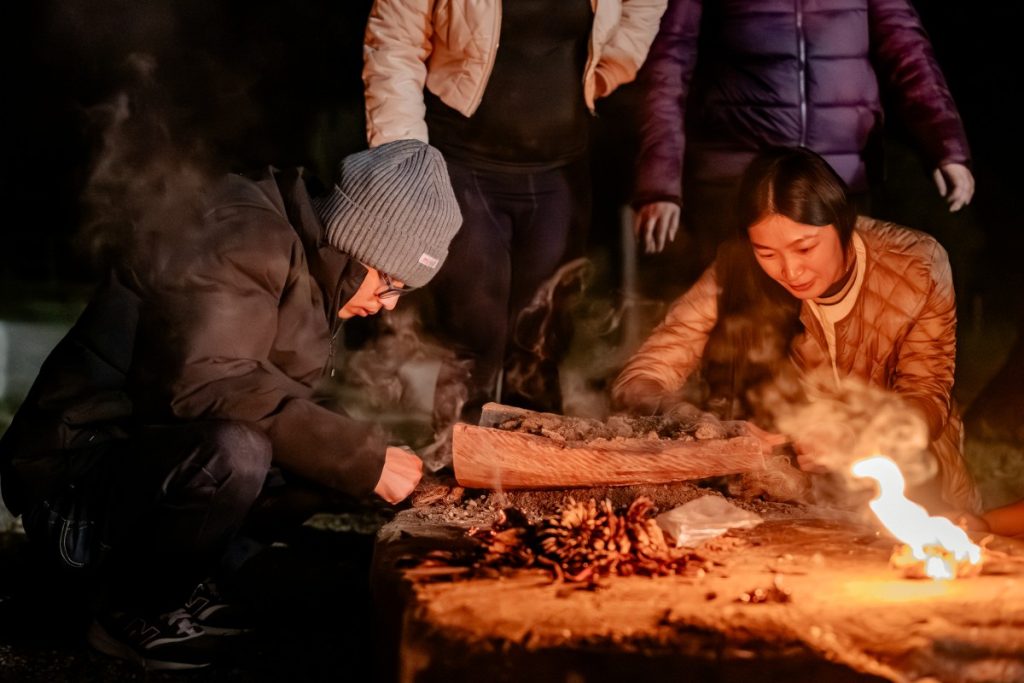
Oyuntugs (right) tries her hand at making fire alongside Bangladeshi scholar Aki Mittra Chakma (left).
The key reflections from this experience are that effective environmental management requires both scientific knowledge and traditional ecological knowledge. Scientific research provides important evidence, but local and Indigenous knowledge can offer valuable insights that may not be captured by data alone. As I continue my studies and develop my career in environmental management, I hope to support approaches that respect and integrate both knowledge systems. The trip strengthened my understanding that caring for the environment is not only a technical responsibility but also a cultural and social one.
Overall, the Ikara-Flinders Ranges study tour was one of the most meaningful learning opportunities I have had in Australia. It helped me understand how knowledge, culture and environmental stewardship can be closely connected. The experience challenged me to think differently about environmental management and reinforced the importance of respecting the knowledge of people who have cared for their landscapes for generations. This experience reminded me that effective environmental management begins with respect for the land, responsibility for its care, and a strong connection between people and nature.