

Bhutanese scholar Dorji Wangdi reflects on study tour in Ikara-Flinders Ranges National Park
Posted: 9 July 2026
On 22–25 May 2026, Australia Awards scholars from South Asia and Mongolia travelled to Ikara-Flinders Ranges for an immersive experience on Adnyamathanha Country. The scholars learnt about the Adnyamathanha people, their culture and their connection to Country under the guidance of John Solar, a Yura man and Adnyamathanha cultural educator.
This NAIDOC Week, we share Bhutanese scholar Dorji Wangdi’s reflections on this trip in his own words.
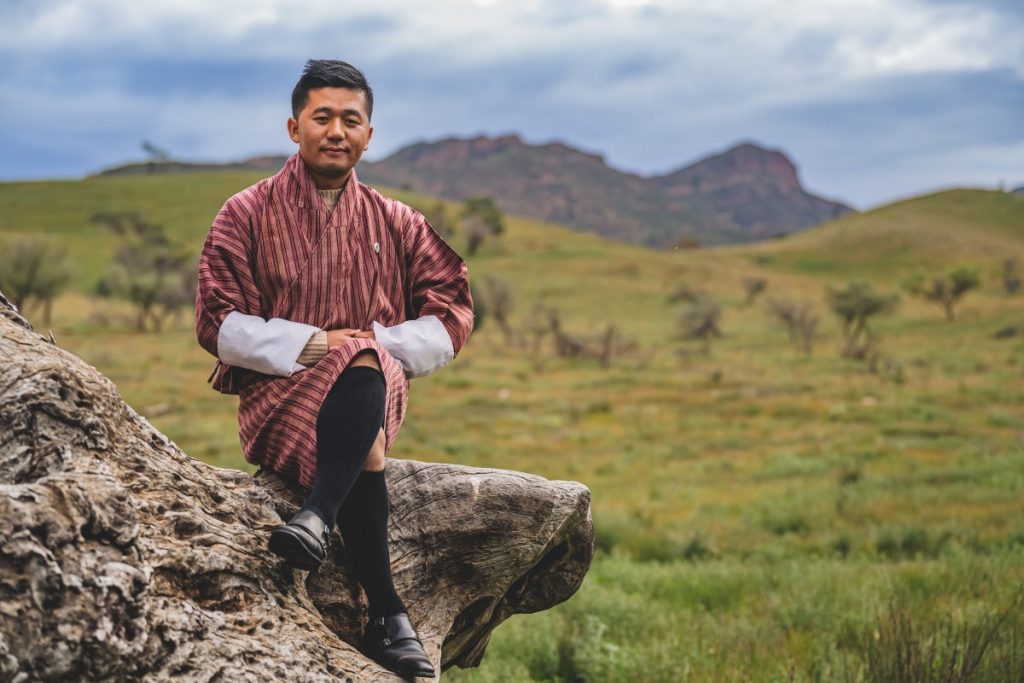
Dorji pictured at the Ikara-Flinders Ranges National Park.
My First Nations study tour to Ikara-Flinders Ranges National Park on Adnyamathanha Country was a meaningful opportunity to learn how culture, Country, biodiversity and sustainable tourism can be connected through respect and responsibility.
The tour began with a Welcome to Country by our Adnyamathanha guide, John Solar. Through language, a smoke offering, and his explanation of respect for Country, creation stories and sacred land features, I was introduced to the depth of the Adnyamathanha people’s connection to place. Standing on Country and listening to John, I gained a deeper appreciation that land is not only a physical space to visit, manage or develop. It can also be a cultural and spiritual landscape that carries memory, identity and responsibility.
One of the strongest lessons for me was the role of storytelling. John’s stories about Yura Muda (creation stories), family, identity, respect and forgiveness connected the past, present and future. His explanation of the values we carry in life as our ‘backpacks’ made me reflect on how stories can guide behaviour and pass responsibility from one generation to the next. I saw storytelling as a quiet form of soft power because it helps people understand a place through meaning, not only through information.
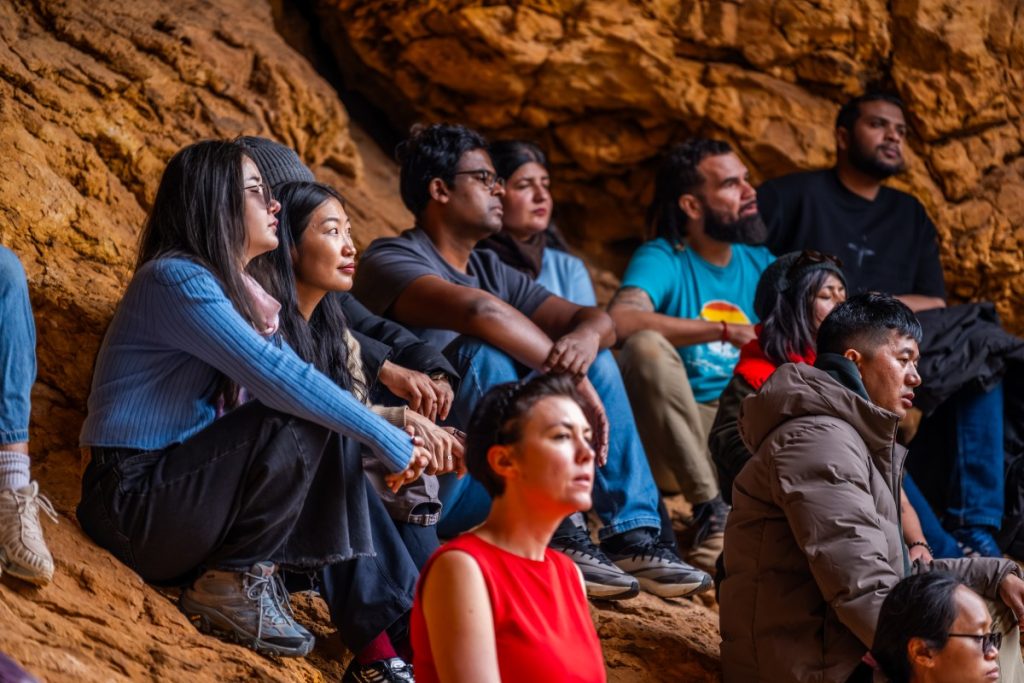
Dorji (in brown jacket) engaging in a mindfulness exercise with other scholars during the visit.
This learning reminded me of Bhutan in a similar cultural context. In Bhutan, many landscapes are also connected with spiritual beliefs, oral histories, monasteries, mountains, rivers and community values. Bhutan’s high-value, low-volume tourism approach is rooted in creating meaningful visitor experiences that respect culture, protect sacred landscapes, conserve the environment and support local communities. This study tour made me appreciate Bhutan’s tourism approach even more. It reminded me that tourism should create deeper value for people, culture, nature and future generations.
At Brachina Gorge, I was introduced to how cultural knowledge, geology and environmental stewardship can be shared within one landscape. While the gorge showed ancient geological history, John also spoke about plants used for food, medicine and ceremony, as well as knowledge of seasons, fire-making and navigation by stars. This helped me reflect on how sustainable tourism can become more meaningful when visitors are guided to understand both the physical landscape and the cultural knowledge connected to it.
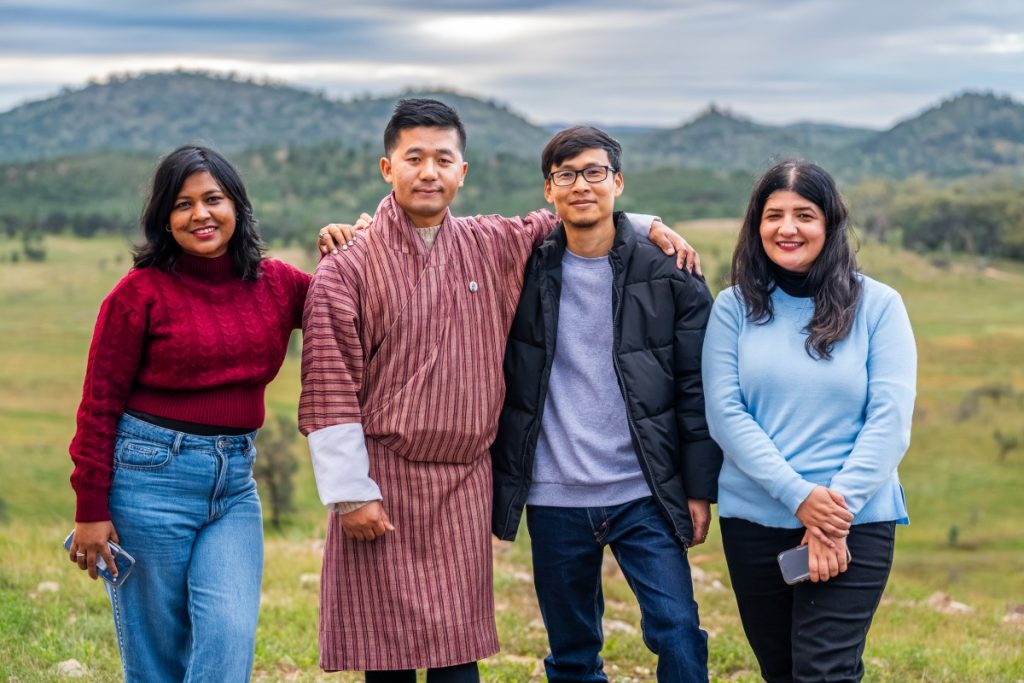
Dorji (second from left) pictured with other scholars from Bangladesh and Pakistan during the visit.
At Akurra Adnya, also known as Arkaroo Rock, I gained a deeper appreciation of how rock art can carry creation stories, ceremonies and landscape knowledge. I understood that such places should not be viewed only as visitor attractions. They are sacred cultural sites that require respect, careful access and long-term protection. This was relevant to my work in Bhutan, where tourism infrastructure near sacred and cultural sites must be planned carefully so that access supports protection rather than weakening cultural value.
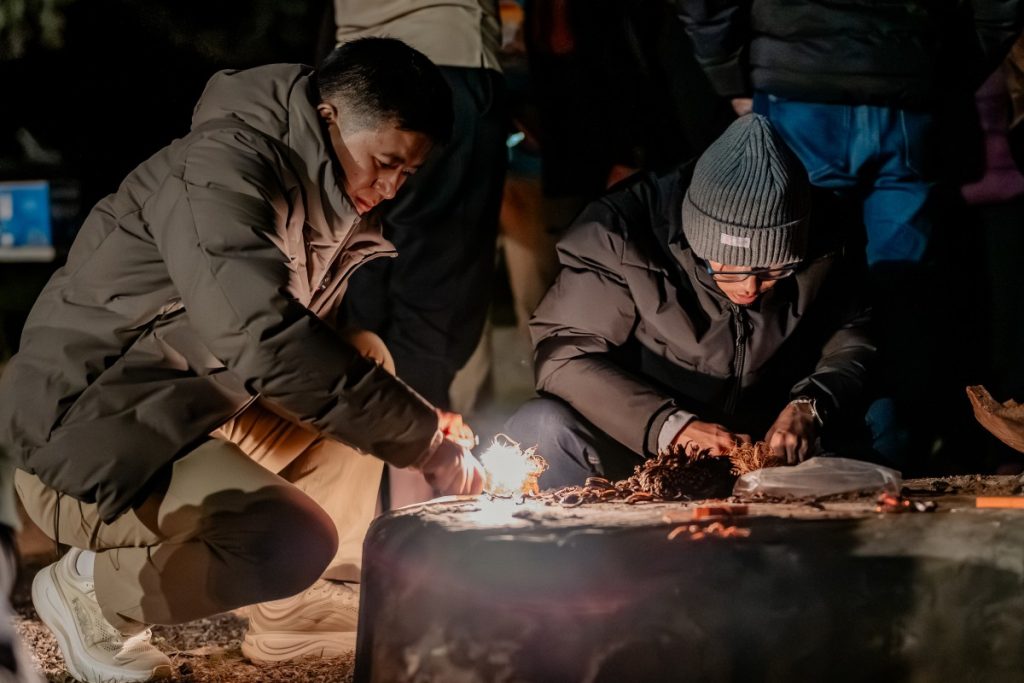
Dorji (left) engaged in a fire-making exercise under John’s guidance.
As a civil engineer working in sustainable tourism infrastructure development in Bhutan, I also noticed the importance of practical site planning and long-term management. Walking trails helped guide visitors through sensitive areas, while information signboards supported learning and respectful behaviour. Basic visitor facilities such as campsites, restrooms and water points improved comfort while reducing pressure on the wider landscape. These examples reminded me that tourism infrastructure is not only about building facilities. It is also about managing access, safety, maintenance and environmental protection over time.
I also gained a deeper appreciation of the co-management of Ikara-Flinders Ranges National Park, where Adnyamathanha representatives and the South Australian Government work together to protect significant sites and manage the land. The yellow-footed rock-wallaby conservation through the Bounceback Program showed how habitat protection, biodiversity conservation and sustainable land management require long-term monitoring, practical action, and collaboration between Traditional Owners and contemporary conservation practices.
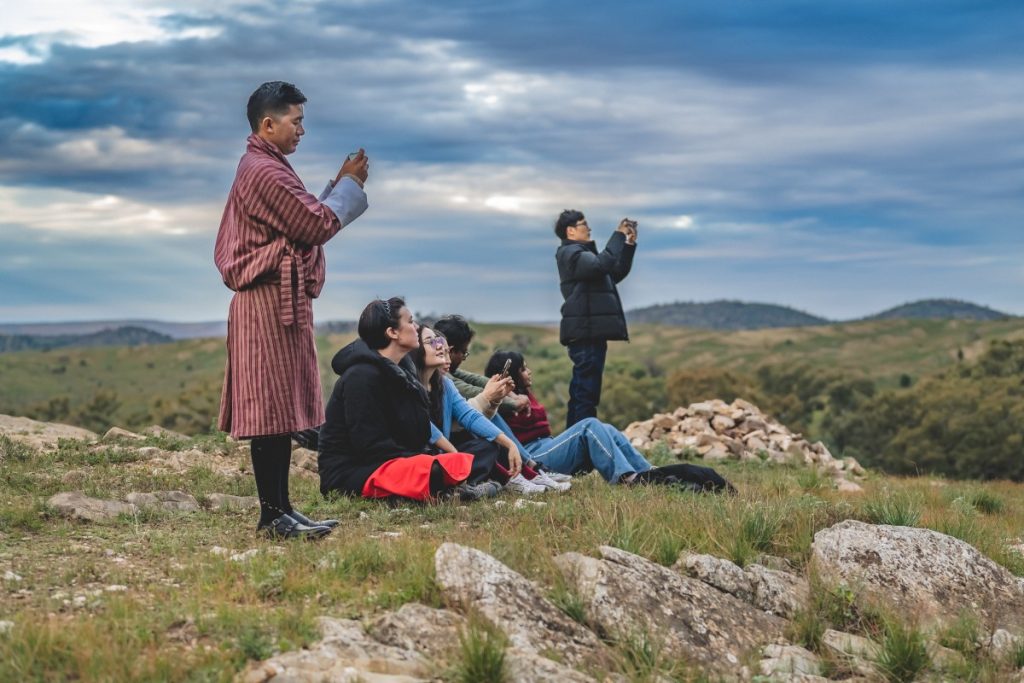
Dorji taking photos of the Ikara-Flinders Ranges National Park during the visit.
These lessons connect with my studies at La Trobe University and my current placement with a road construction company in Victoria, where I am learning about infrastructure delivery, quality assurance, safety, sustainability and stakeholder coordination. The study tour also strengthened the direction of my Development Impact and Linkages Plan by reinforcing the importance of sustainable tourism infrastructure, environmental sustainability, community involvement and responsible site management in Bhutan.
I will carry this learning into my studies, professional practice and future contribution to Bhutan by supporting infrastructure that respects culture, protects the environment, and creates long-term value for communities and future generations.