

Bangladeshi scholar Aki Mittra Chakma reflects on study tour in Ikara-Flinders Ranges National Park
Posted: 9 July 2026
On 22–25 May 2026, Australia Awards scholars from South Asia and Mongolia travelled to Ikara-Flinders Ranges for an immersive experience on Adnyamathanha Country. The scholars learnt about the Adnyamathanha people, their culture and their connection to Country under the guidance of John Solar, a Yura man and Adnyamathanha cultural educator.
This NAIDOC Week, we share Bangladeshi scholar Aki Mittra Chakma’s reflections on this trip in his own words.
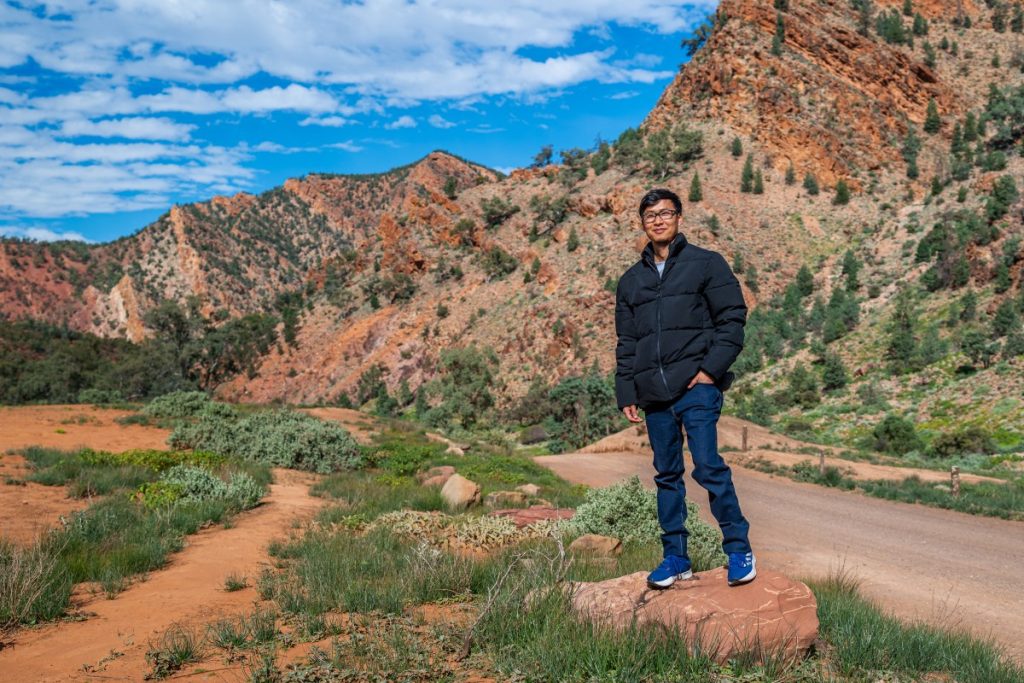
Aki Mittra pictured at the Ikara-Flinders Ranges National Park.
The First Nations Cultural Immersion Study Tour at Ikara-Flinders Ranges National Park was a very interesting, enjoyable and memorable experience for me. On the first day, our guide John Solar welcomed us to Adnyamathanha Country through a Welcome to Country ceremony. He also shared some traditional Indigenous knowledge, including greetings, cultural practices and spiritual beliefs. John also explained the significance of the Adnyamathanha flag. For me, it was very meaningful because I could compare these traditions with my own indigenous culture and traditions from Bangladesh. I found similarities in the connection with land, community and respect for nature. Later, we travelled to Stokes Lookout, where John shared the Yura Muda (creation stories) of the Adnyamathanha people, which explain and map the physical and spiritual landscape of their country.
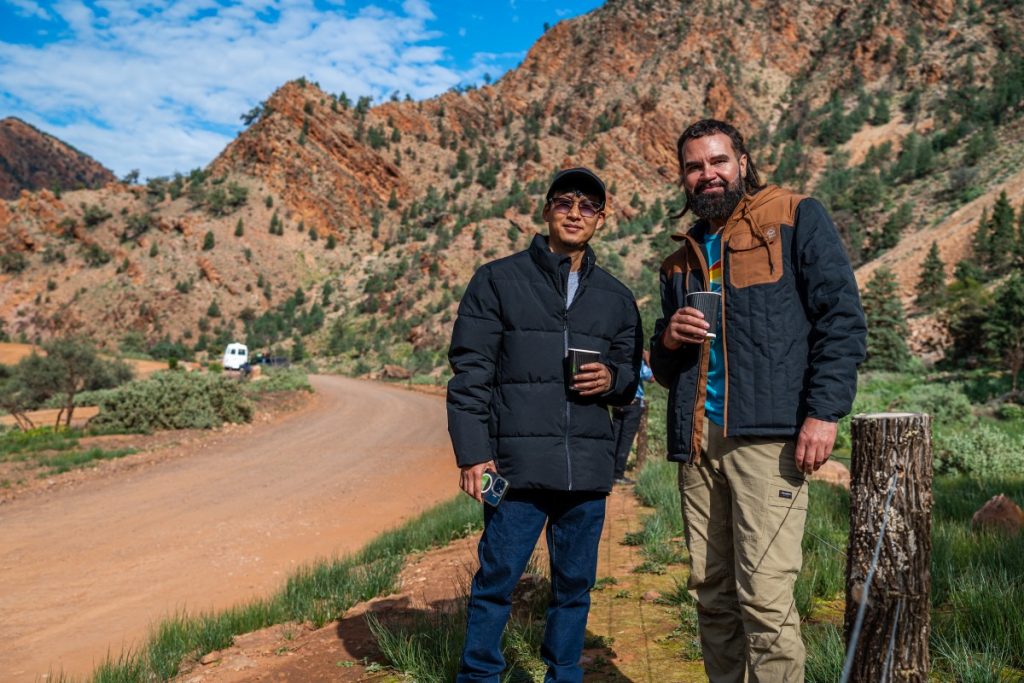
Aki Mittra pictured with John (right) during their tour at the Ikara-Flinders Ranges National Park.
On the second day, we travelled the Brachina Gorge Geological Trail, which contains ancient rock formations that are more than 600 million years old. It was fascinating to learn about the geological history and environmental changes that have shaped the region over time. John also shared the details of Adnyamathanha culture and explained the significance of the plants used in ceremonies, traditional medicine and food. We also learnt how the Ikara-Flinders Ranges National Park is co-managed by Adnyamathanha representatives and the South Australian state government. This management system combines traditional cultural knowledge with contemporary Western conservation and scientific practices to protect the environment and culturally significant sites. Then we travelled to observe yellow-footed rock-wallabies (andu in the Adnyamathanha language) in their natural habitat, which reminded me of the importance of wildlife protection and conservation. At night, John showed us how to start fires from scratch and we then tried making fires ourselves. For me, the fire-making activity was so challenging, but after several attempts I finally succeeded in making a fire. This experience gave me confidence, satisfaction, and a lesson about patience and determination. After this event, we went to night walk to look for local animals, including the western quoll (idnya), possums and the witchetty grub, which takes its English name from the Adnyamathanha word witjuri. John also highlighted how Adnyamathanha and other Indigenous nations in Australia navigated by the stars and understanding of the seasonal changes.
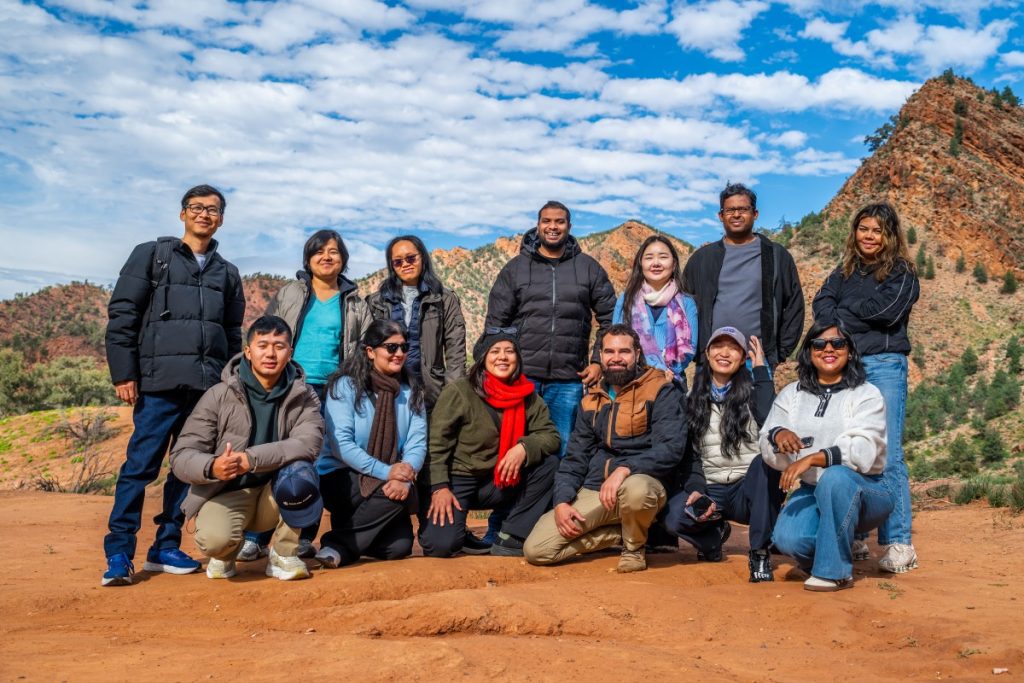
Aki Mittra (left, back row) photographed with other scholars and guide John during the visit.
On the following day, we visited Akurra Adnya (Arkaroo Rock), one of the most culturally significant and sacred Adnyamathanha rock art sites in the park. John shared the Akurra Adnya features of ancient rock paintings, which not only illustrate the creation stories but also map the points of landscape and their cultural ceremonies. At the end of the hike, John lit a fire to say farewell to the scholars, to provide safe passage and remove any negative spirits that might accompany us from the site. John also inspired me a lot by his deep knowledge of culture, history and Country, and the way he is working to protect Indigenous identity, culture and traditions. Throughout the tour, I learnt several things, such as sustainable environmental management that requires collaboration, respect for traditional knowledge and active community participation. As I work in the civil service of Bangladesh, this lesson also helps me in future to develop more inclusive and sustainable environmental policies and practices in my country.
Finally, at the evening, we shared our reflections with Alice Tamang, who is working as Indigenous Adviser, and we also participated in a quiz that was prepared by Alice. This activity further improved our Indigenous Australian knowledge. Overall, this study tour was highly engaging, enjoyable and educational. This tour provided me with a great opportunity to learn more about Australian Indigenous knowledge, culture and traditions by observing their places and meaningful discussions. I believe this experience will help me in the future to do something meaningful for my own people and build a strong network with other First Nations communities.